Parks & Destinations

Tanzania's national parks span four circuits. We operate across all of them — from the iconic Serengeti to the spice-scented shores of Zanzibar.

Where We Take You

Click any destination to explore it in detail.
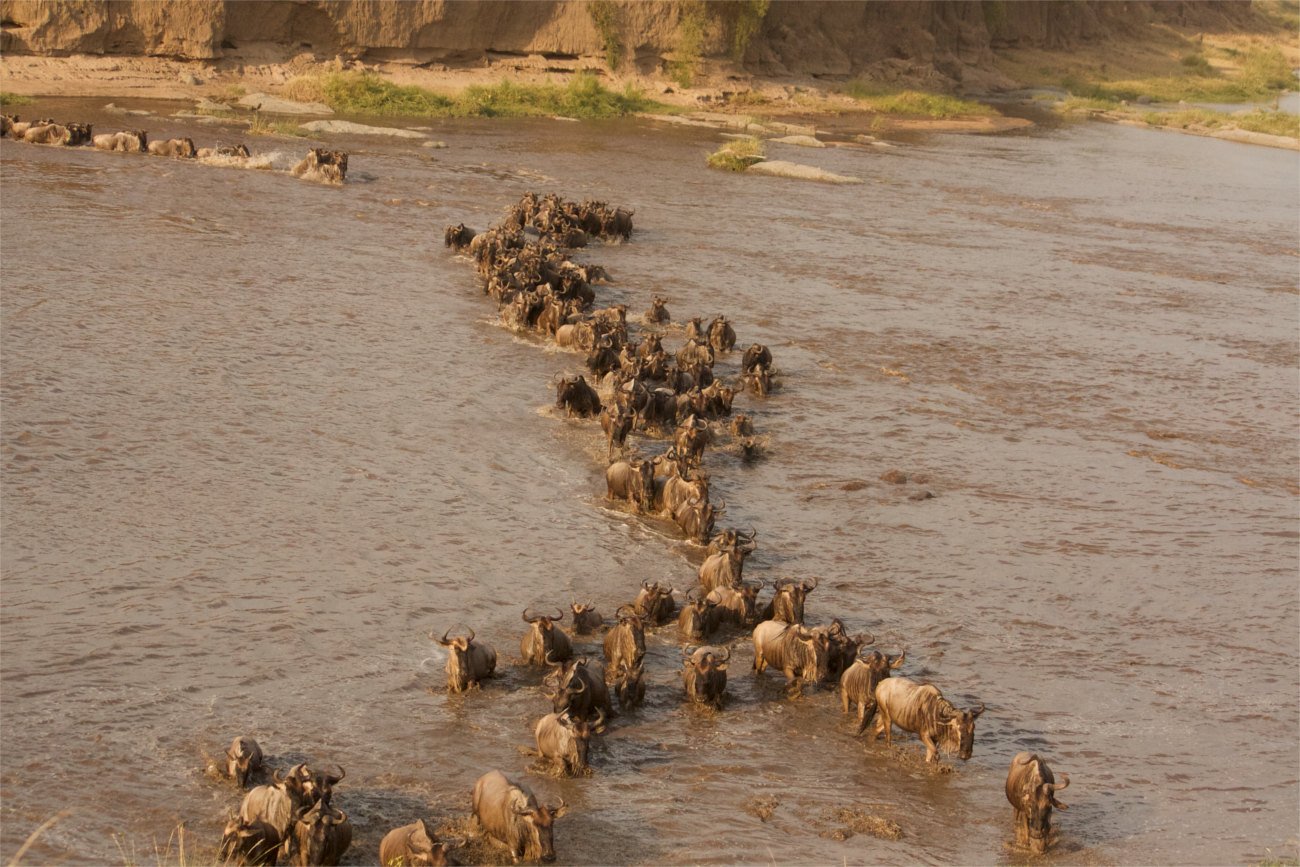
Sweeping view of the Serengeti plains

Serengeti National Park

14,760 km² of endless plains. Home to the Great Migration — over 1.5 million wildebeest and 300,000 zebra. Over 500 bird species. Four distinct habitat zones from open grassland to acacia woodland.

Read more ↓
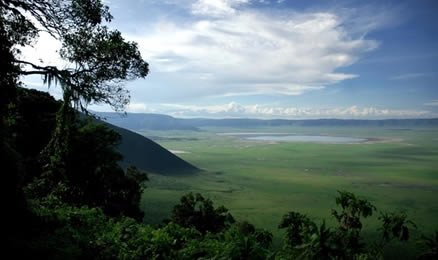
Ngorongoro Crater panoramic view

Ngorongoro Crater

The world's largest unbroken volcanic caldera, covering 259 km² with walls over 600 metres high. Home to 30,000–40,000 animals year-round, including the endangered black rhino.

Read more ↓
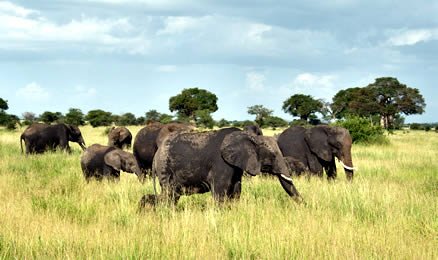
Elephants near baobab trees in Tarangire

Tarangire National Park

Famous for vast elephant herds and ancient baobab trees. Night game drives available ($120pp). Bush walks with armed ranger ($80pp). A quieter alternative to the Serengeti with superb birdlife.

Read more ↓
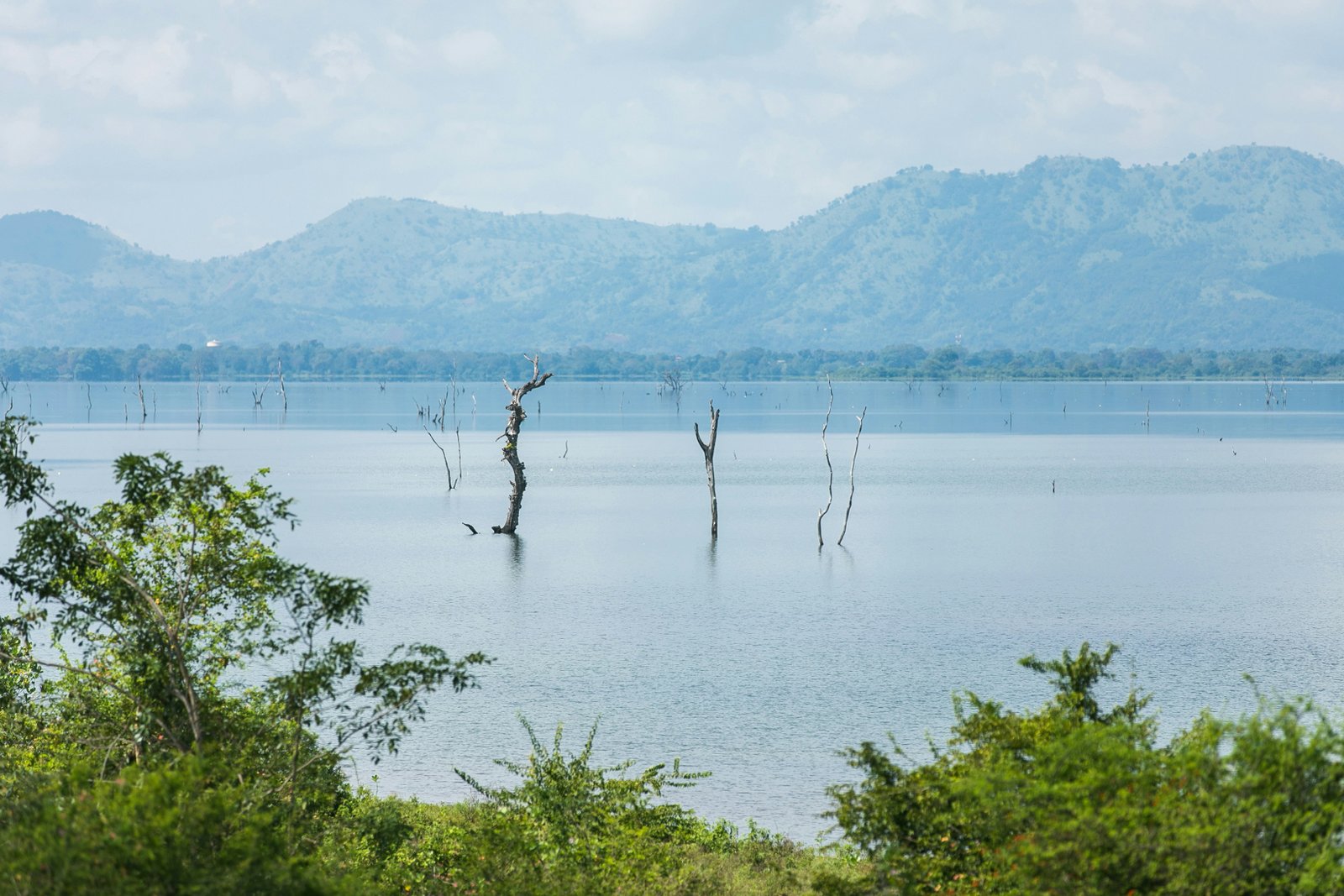
Lake Manyara shoreline with flamingos

Lake Manyara National Park

Set along the dramatic western wall of the Great Rift Valley. Known for tree-climbing lions, flamingo-lined shores, and over 400 bird species. Compact and diverse.

Read more ↓
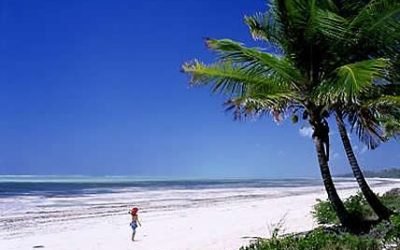
White sand beach on Zanzibar Island

Zanzibar Island Extension

The Spice Island — 23 miles off the coast. White sandy beaches, Stone Town's UNESCO heritage, spice plantations, and warm Indian Ocean waters. Budget and luxury packages available.

Read more ↓
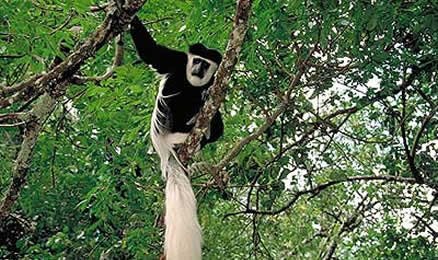
Black-and-white Colobus monkey in Arusha National Park

Arusha National Park

Just 40 minutes from Arusha, home to the rare black-and-white Colobus monkey, the Momella Lakes, and stunning views of both Mt Meru and Kilimanjaro.

Read more ↓
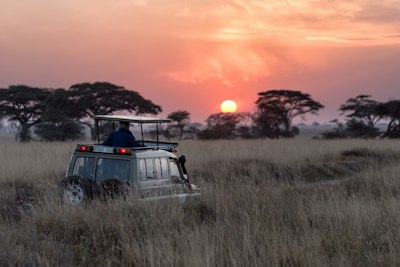
Wildlife on the African savannah

Southern & Western Circuits

Off the beaten track — Ruaha, Selous, Katavi, Mahale, and Gombe. Chimp trekking, walking safaris, and remote wilderness. For experienced travellers seeking fewer crowds.

Read more ↓
Serengeti National Park

Sweeping view of the Serengeti plains with wildebeest herds
Size 14,760 km²
Established 1951
Migration herds 1.5M wildebeest, 300,000–400,000 zebra
Migration route 800 km annual circuit
Bird species 500+
Habitat zones 4 distinct zones

The name Serengeti comes from the Maasai word meaning “endless plains,” and the moment you arrive you understand why. This is one of the oldest and most celebrated ecosystems on Earth — 14,760 square kilometres of grassland, savannah, and riverine forest established as a national park in 1951. It is, without exaggeration, the finest wildlife theatre in Africa.

The headline act is the Great Migration. Each year, approximately 1.5 million wildebeest and between 300,000 and 400,000 zebra undertake an 800-kilometre circuit through the Serengeti ecosystem, driven by rainfall and the search for fresh grazing. From July through September, the herds mass in the northern Serengeti, making the treacherous crossing of the Mara River — one of the great spectacles of the natural world. By December they have drifted south to the short-grass plains near the Gol Mountains, and in January and February some quarter of a million calves are born within a few short weeks. By May the columns are moving again, resuming their ancient march northward.

The Serengeti contains four distinct habitat zones, each with its own character and wildlife. The northern sector is hilly and wooded, with the Mara River cutting through granite kopjes. The southeastern plains are open grassland stretching to the horizon — classic Serengeti, and the calving grounds of the migration. The western corridor is defined by black clay soil, dense woodlands, and the Grumeti River. The central region around Seronera is acacia savannah — prime year-round game viewing territory, where resident prides of lion and leopard are reliably seen.

Beyond the migration, the Serengeti supports an extraordinary diversity of resident wildlife. Thomson's and Grant's gazelles graze the open plains alongside cape buffalo, topi, and waterbuck. Giraffes and warthogs browse through the acacia woodland. The predator roster is formidable: large prides of lion, solitary cheetahs hunting the grasslands, elusive leopards draped in sausage trees, and along the rivers, hippo and Nile crocodile in good numbers.

Birders will find themselves as occupied as the big-game enthusiasts. Over 500 species have been recorded here, including secretary birds stalking through the grass, marabou storks, ostriches, kori bustards (Africa's heaviest flying bird), the jewel-bright lilac-breasted roller, bateleur eagles soaring on thermals, and several species of vulture patrolling the skies above every kill.

Enquire About Serengeti Safaris

Ngorongoro Crater

Panoramic view down into Ngorongoro Crater from the rim
Caldera floor 259 km²
Crater walls Over 600 m high
Formed 2–3 million years ago
Resident animals 30,000–40,000 year-round
Special species Endangered black rhino
UNESCO status World Heritage Site

There is nothing quite like the Ngorongoro Crater. It is the world's largest unbroken volcanic caldera — a vast natural amphitheatre 259 square kilometres in extent, its walls rising over 600 metres above the floor. The crater was formed between two and three million years ago through faulting associated with the Great Rift Valley, and what remains is, in essence, a self-contained world: a place where predator and prey exist in extraordinary density, and where the chances of seeing the endangered black rhino are higher than almost anywhere else in East Africa.

The name itself has a pleasing origin. It is said to derive from the Maasai warriors who once grazed their cattle here — the word is an onomatopoeia of the sound “koh-rohngoroh,” imitating the clanging of the bells the warriors wore in battle.

Between 30,000 and 40,000 large animals reside on the crater floor year-round. The habitat is remarkably varied for such a compact space. The Mandusi and Gorogor swamps attract hippo, elephant, and waterfowl in great numbers. The lerai forest — a dense stand of yellow-barked fever acacia — provides shade and cover for elephant, buffalo, and the occasional leopard. Lake Magadi, a shallow soda lake on the crater floor, is frequently rimmed with flamingos, their pink reflections shimmering against the alkaline water.

The birdlife is outstanding. Ostriches stride across the grassland. Kori bustards display in the short grass. Secretary birds hunt snakes with their distinctive stamping gait. Crowned cranes, vultures, egrets, and flamingos are all easily seen. A morning on the crater floor is as rewarding for the birder as it is for the first-time safari visitor hoping to tick off the Big Five.

We spend the maximum six hours permitted on the crater floor, entering at dawn when the light is at its finest and the animals most active. It is, quite simply, one of the great wildlife experiences on Earth.

Enquire About Ngorongoro Safaris

Tarangire National Park

Elephants gathering near baobab trees in Tarangire National Park
Size 2,600 km²
Location Southeast of Lake Manyara
Elephant population ~3,000 (1980 census)
Bird species 350+
Night drives $120 per person
Bush walks $80 per person

Tarangire is the park that safari connoisseurs return to again and again. Covering 2,600 square kilometres southeast of Lake Manyara, it retains a real air of undiscovered Africa — vast, unhurried, and mercifully free of the vehicle congestion that can sometimes affect its more famous neighbours. The landscape is defined by enormous baobab trees, some of them centuries old, rising from a carpet of golden grass and acacia woodland interspersed with palm groves along the Tarangire River.

The wildlife numbers are exceptional. A 1980 census recorded 32,000 zebra, 30,000 impala, 25,000 wildebeest, 6,000 buffalo, and approximately 3,000 elephant within the park boundaries. Elephants are the star attraction — you will see them in small family groups or in large herds numbering a hundred or more, particularly during the dry season when they congregate along the river. There is something deeply moving about watching an elephant herd moving slowly through a grove of ancient baobabs, a scene that has played out here for millennia.

The predator sightings are consistently good. Lions are resident and frequently seen, particularly along the river. Spotted hyenas are common. Cheetahs patrol the open grasslands. Leopards, as always, require patience and a sharp-eyed guide. Tarangire is also one of the best parks in the northern circuit for lesser kudu and the diminutive dik dik, both of which favour the denser bush.

With over 350 recorded bird species, Tarangire is a birding destination in its own right. The swamps and river attract a concentration of waterbirds, raptors are plentiful, and the park's varied habitats support an unusual diversity of species.

Tarangire offers something the Serengeti does not: night game drives ($120 per person) and guided bush walks with an armed ranger ($80 per person). Both are outstanding experiences. The night drive reveals a different cast of characters — bush babies, genets, civets, and the eyeshine of nocturnal predators. The bush walk brings you into intimate contact with the landscape in a way that no vehicle can match.

Enquire About Tarangire Safaris

Lake Manyara National Park

Lake Manyara shoreline with flamingos and the Rift Valley escarpment
Total area 330 km²
Lake area 230 km²
National Park since 1960
Bird species 380+
Famous for Tree-climbing lions
Nearby village Mto Wa Mbu (craft market)

Lake Manyara may be the smallest of the northern circuit parks, but it punches well above its weight. Gazetted as a national park in 1960, its 330 square kilometres — of which fully 230 are the lake itself — are wedged dramatically between the western wall of the Great Rift Valley and the alkaline waters of the lake. The result is a compact park of astonishing ecological variety.

The park's name comes from the Maasai word for the Euphorbia tirucalli plant, a thorny succulent that the Maasai traditionally used to build livestock enclosures. Today the vegetation is remarkably diverse: towering acacia woodland gives way to sausage trees, doum palms, magnificent baobabs, and the distinctive yellow fever trees whose smooth, sulphur-coloured bark creates one of the most photographed forest drives in East Africa.

Lake Manyara is famous for two things above all: its tree-climbing lions and its elephants. The lions here have a peculiar habit of resting in the branches of acacia trees, sometimes draped along a limb several metres above the ground. The reasons for this behaviour remain unclear — it may relate to escaping tsetse flies, or simply to catching a breeze on hot days — but it is a memorable sight. The elephant herds are large and frequently encountered along the forest tracks, and hippos wallow in the springs that feed the lake from the escarpment above.

The birdlife is superb. Over 380 species have been recorded. The soda lake attracts large numbers of flamingos — both greater and lesser — whose massed pink ranks create one of the most evocative images in Tanzanian wildlife. Pelicans, storks, cormorants, and herons are all present in good numbers.

Lake Manyara enjoys water year-round, fed by springs along the base of the Rift Valley escarpment. The main dry season runs from June to September, with a shorter dry spell in January and February. Even in the driest months, the springs ensure the park remains green and productive while other areas parch.

The nearby village of Mto Wa Mbu is well worth a stop. A lively market town with a thriving craft market, it offers a glimpse of daily Tanzanian life and an opportunity to pick up locally made carvings, batiks, and Maasai beadwork.

Enquire About Lake Manyara Safaris

Arusha National Park

Black-and-white Colobus monkey in the canopy of Arusha National Park
Size 552 km²
Distance from Arusha 40 minutes by road
Mt Meru summit 4,566 m
Special species Black-and-white Colobus monkey
Key features Ngurdoto Crater, Momella Lakes
Absent species No elephants, no lions

Arusha National Park is Tanzania's best-kept secret — and its most convenient. Just a 40-minute drive from Arusha town, and even closer to Kilimanjaro International Airport, it is the ideal half-day or full-day excursion for travellers arriving early or with a day to spare before or after a longer safari.

The park's chief distinction is the black-and-white Colobus monkey. This is the only place on the northern safari circuit where you can reliably see these striking primates, with their flowing white mantles and long tails. They inhabit the montane forest on the slopes of Mt Meru and around the Ngurdoto Crater, moving through the canopy in family troops. It is a genuinely special sighting, and one you will not replicate elsewhere on a standard northern circuit itinerary.

Ngurdoto Crater is a miniature Ngorongoro — a small, perfect volcanic caldera whose floor is a swampy grassland populated by buffalo, warthog, and a variety of monkeys. No vehicles are permitted on the crater floor, so it retains a pristine, untouched quality. You view it from the forested rim, binoculars in hand, which adds to the sense of discovery.

The Momella Lakes are another highlight — a series of shallow alkaline lakes, each a different hue of green or blue depending on its mineral content and the algae it supports. Flamingos wade in the shallows, and the reflections of Mt Meru in the still morning water are the stuff of postcards. On clear days, the snow-capped summit of Kilimanjaro is visible to the east, framed by the park's lush vegetation.

Mt Meru itself, at 4,566 metres, is Tanzania's second-highest peak and a serious mountaineering objective in its own right. Many climbers use it as acclimatisation for Kilimanjaro. The summit views — taking in both the Meru crater and Kilimanjaro floating above the clouds — are among the finest in East Africa.

What Arusha National Park lacks is also notable: there are no elephants and no lions. This makes it unique among northern circuit parks and means that walking safaris and canoeing on the Momella Lakes are possible without the safety constraints that apply elsewhere. It is a gentler, more contemplative park — and none the worse for it.

Enquire About Arusha Day Trips

Zanzibar Island

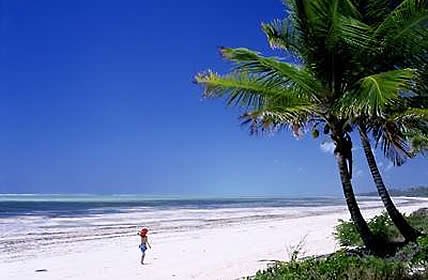
White sandy beach and turquoise water on Zanzibar's coast
Distance from coast 23 miles
Island area 640 sq miles
Known as The Spice Island
Key attraction Stone Town (UNESCO)
Wildlife Red Kirk's Colobus Monkeys (Jozani)
Packages Budget and Luxury available

Zanzibar lies just 23 miles off the East African coast, yet it feels like another world entirely. This island of 640 square miles is fringed with white sandy beaches and coconut groves, its interior fragrant with clove plantations, and its history as rich and layered as the spice trade that made it famous.

The island's strategic position in the Indian Ocean has attracted visitors and settlers for centuries — Malays, Indians, Arabs, and Egyptians all left their mark. Cloves were introduced in 1818, and Zanzibar quickly became the world's leading producer, earning it the enduring title of “Spice Island.” The darker side of that prosperity was the slave trade, which at its height saw an estimated 50,000 people pass through Zanzibar's markets annually. So important was the island that the Sultan of Oman relocated his capital here, drawn by the wealth of ivory and cloves. Zanzibar became a British protectorate in 1890, gained independence in 1964, and shortly after united with Tanganyika to form the modern nation of Tanzania.

Stone Town, the island's historic heart, is a UNESCO World Heritage Site and a place of extraordinary atmosphere. The narrow streets wind between coral-stone buildings with elaborately carved wooden doors. The House of Wonders — once the most modern building in East Africa — stands on the waterfront alongside the People's Palace. The Arab Fort, built around 1700, and the Shirazi Mosque, dating to 1107 AD, speak to the depth of the island's history. Walking through Stone Town at dusk, with the call to prayer echoing above the rooftops and the scent of grilled seafood drifting from the night market, is one of the memorable experiences of any visit to East Africa.

Beyond Stone Town, the Jozani Forest is home to the rare red Kirk's Colobus Monkey, found nowhere else on Earth. Guided walks through the forest offer reliable sightings of these engaging primates. Prison Island, a short boat ride from Stone Town, houses a colony of giant Aldabra tortoises and offers good snorkelling in clear waters.

We offer both budget and luxury Zanzibar extension packages, typically of three to five nights, designed to complement a mainland safari. Whether you prefer a simple beachside guesthouse or a world-class resort with a private beach, we will match the accommodation to your style and budget. It is the perfect way to end a Tanzania journey — feet in the sand, spiced tea in hand, watching the dhows come home at sunset.

Enquire About Zanzibar Extensions

Explore Tanzania With Us

Every itinerary is tailored. Tell us your dates, interests, and budget — we'll handle the rest.

Get a Custom Quote
WhatsApp Us Send Enquiry